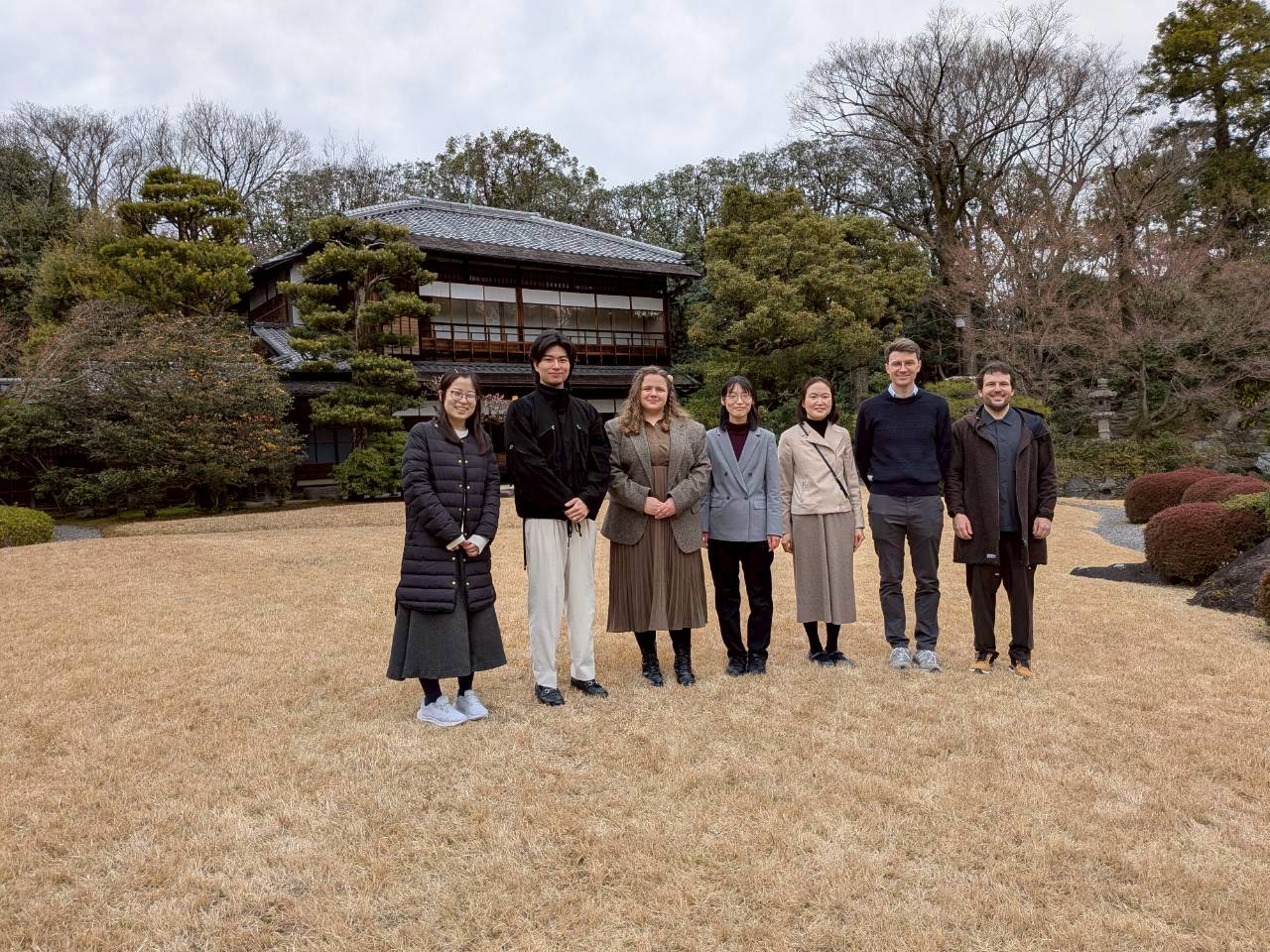
On Friday, February 27, 2026, a research presentation meeting for graduate students in the Global Citizenship Education Project was held at Seifuso on the Kyoto University campus. On the day, five presenters took part, together with faculty members and students from both within and outside the Global Citizenship Education Project.
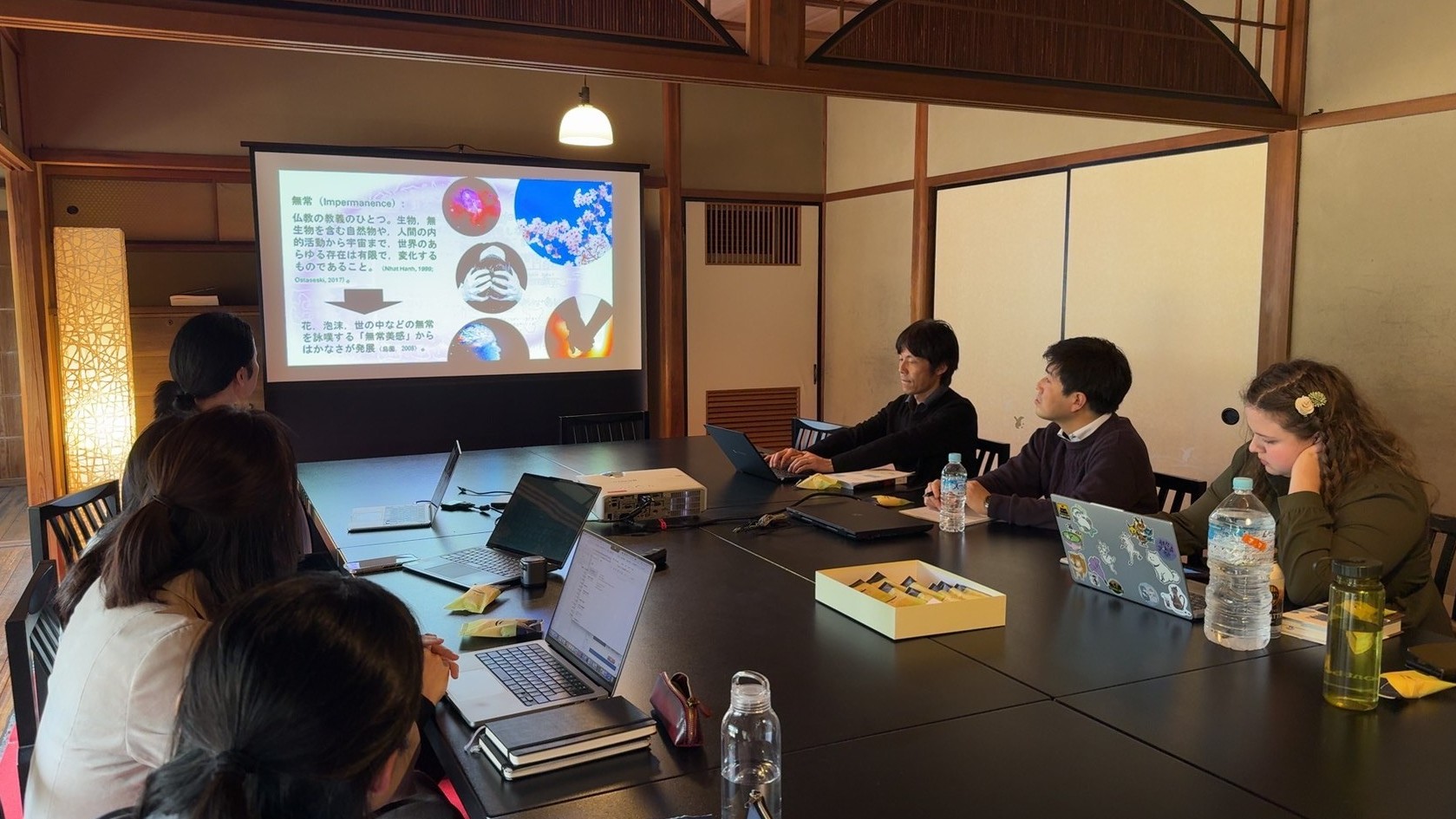
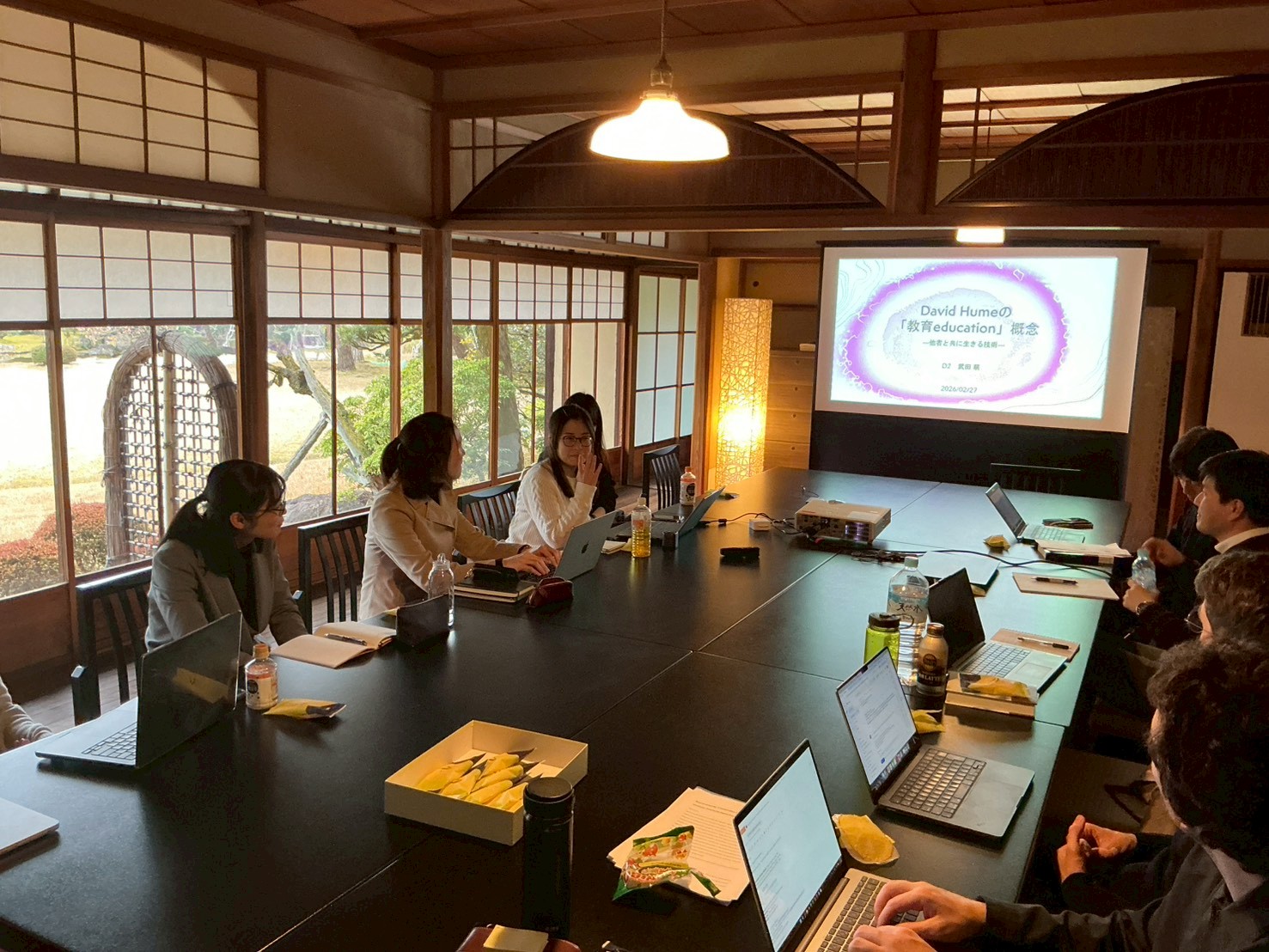
The Global Citizenship Education Project includes faculty members from a wide range of fields within the Graduate School of Education, as well as students from various courses. This presentation meeting was organized as an opportunity not only for participants to report on the outcomes of their research in their respective specialized fields, but also to reconnect their work with the themes of the “world” and the “global citizen,” and to engage in interdisciplinary discussion.
On the day, participants gave presentations under the following titles (in order of presentation)
- Kanji Goda (Master’s Program, Educational Cognitive Psychology Course)
“The Conceptual Structure of Ephemerality and Its Relationship to Other Psychological Characteristics” (「儚さの概念構造と他心理特性との関連の検討」) - Takechika Hayash (Doctoral Program, Educational Cognitive Psychology Course)
“Psychological Heterogeneity and Religiosity” (「精神的雑居性と宗教性」) - Katarina Woodman (Doctoral Program, Educational Cognitive Psychology Course)
“How the Prediction That ‘Foreigners Cannot Speak Japanese’ Affects Japanese Language Processing in Multilingual Communication in Japanese Society” (「『外国人=日本語ができない』予測が日本社会の多言語コミュニケーションにおける日本語処理に与える影響」) - Moe Takeda (Doctoral Program, Philosophy and History of Education Course)
“David Hume’s Concept of Education: The Art of Living with Others” (「デイヴィッド・ヒュームの教育概念 —他者と共に生きる技術―」) - Akane Tano (Doctoral Program, Educational Methodology and Developmental Science Course)
“The Theory and Practice of the Humanistic Approach: Reconsidering Foreign Language Education for Communication” (「ヒューマニスティックアプローチの理論と実践:コミュニケーションのための外国語教育再考」)
Although the presentations were given by students from different fields of specialization, many of the issues they addressed overlapped in their concern with the world, culture, others, and communication. As a result, the presentations highlighted how these issues are approached differently across disciplines. After the presentations, an active discussion took place, providing an opportunity to reflect on how insights from multiple fields might be brought together in order to understand these issues in a more multilayered way.
The presentations were held at Seifuso, a historic building owned by Kyoto University. Seifuso is designated as an Important Cultural Property (building), and prior to the presentation meeting, participants were given a tour of the building and its garden. We greatly appreciated the opportunity to view the carefully maintained garden, which has been passed down through continued stewardship, as well as the valuable interior features of the building dating from the Meiji period onward. We would like to take this opportunity to express our sincere gratitude to the Seifuso staff for making this valuable occasion possible.