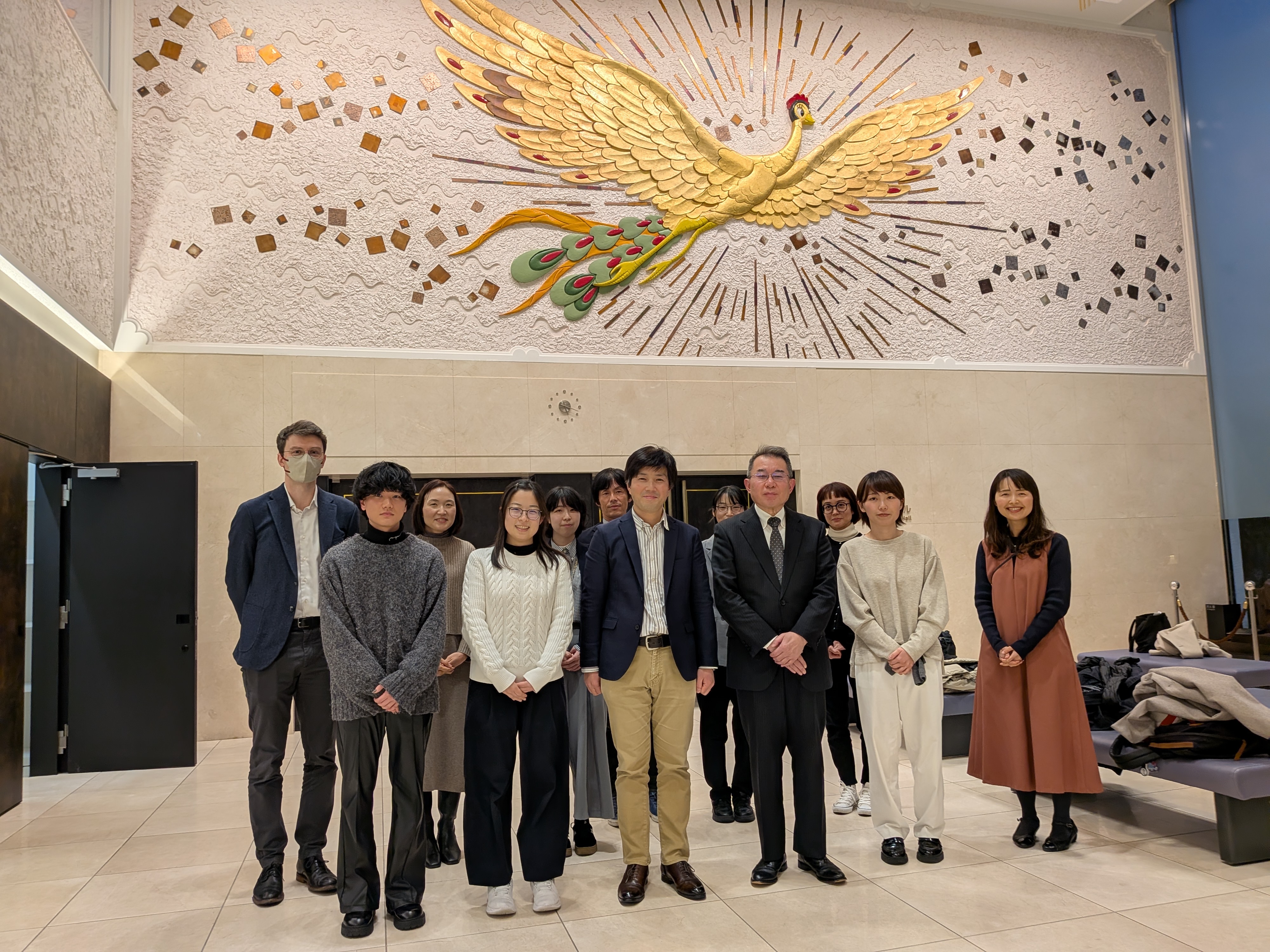
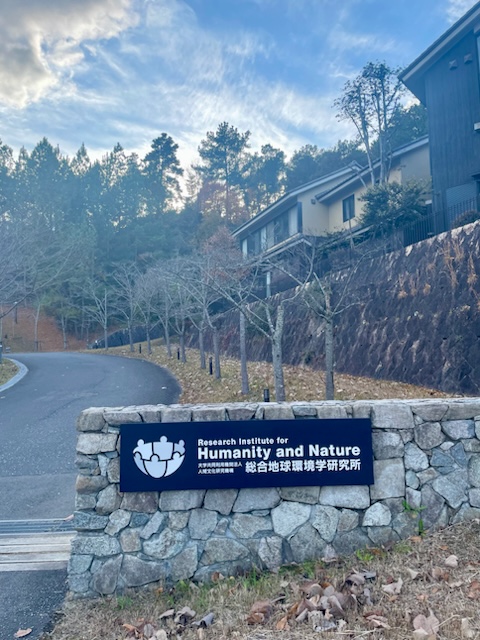
On Tuesday, January 20, 2026, a group of volunteer faculty members and students from the Graduate School of Education, including members of the Global Citizenship Education Project, visited the Ritsumeikan University International Peace Museum. The museum opened in 1992, and serves as an educational and research institution that puts Ritsumeikan University’s teaching philosophy of “peace and democracy” into practice. It is also a museum that is open to society and functions as a public-facing facility that shares information and communicates outward.
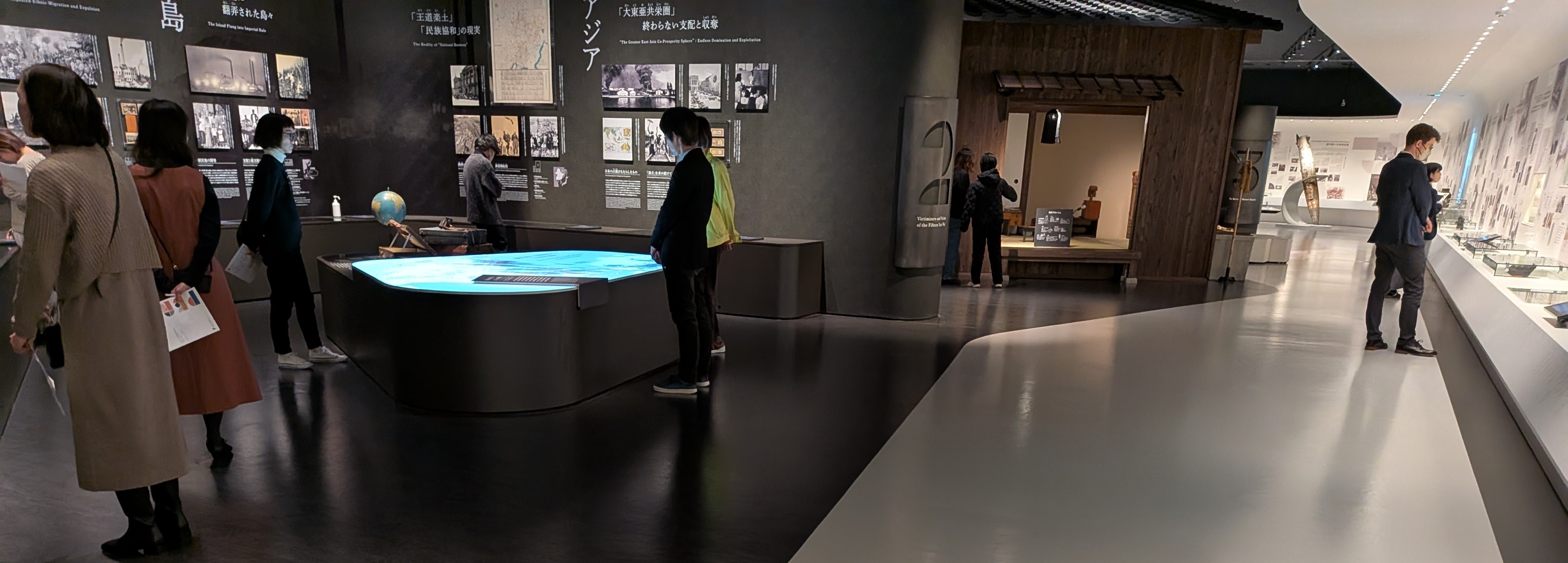
On the day, we first had the opportunity to tour the permanent exhibition on the basement floor. With the intention of making it a museum where visitors can consider “peace” as something that does not remain merely the antonym of “war,” the exhibition displayed, together with abundant historical materials, the movements of countries in East Asia from the era of imperialism through the twentieth-century world wars and up to the present day, as well as the lives and voices of the people who lived in each region. The exhibition was designed to present not only a chronological history of nations and regions, but also the lived histories of individuals within those circumstances. It made us feel how difficult it is for people to create the relationship we call “peace,” and also reminded us that building it is work we ourselves must do.
During the exhibition tour, museum curators and student interns provided an “interactive guide.” While grounded in each participant’s own questions and areas of expertise, participants were able, through dialogue, to deepen their thinking as they viewed the exhibition content.
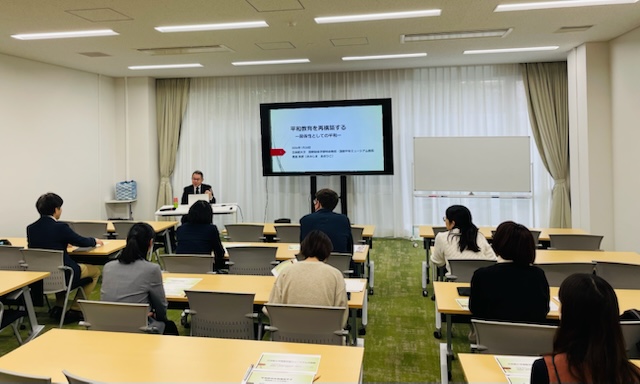
In Professor Kimishima’s lecture, “Reconstructing Peace Education—Peace as Relationship,” he focused on the “relational turn” in the field of the social sciences, and spoke about viewing “peace” not as a problem closed within a subject, but as a relationship; proposals for peace education based on that view; and examples of peace education practices grounded in dialogue. After the lecture, a discussion was held with participants.
We took this opportunity to express our sincere gratitude to Professor Kimishima and to all the staff of the Ritsumeikan University International Peace Museum for providing this valuable opportunity.