Author: Takachika Hayashi | Translator: Katarina Woodman
Our lives are not our own. From womb to tomb, we are bound to others. Past and present. And by each crime and every kindness, we birth our future.
Sonmi-451 from the movie “Cloud Atlas”
Introduction
When you hear the term “world citizen,” what kind of image comes to mind?
Someone working for the United Nations or an NGO? A businessman flying around the world? An influencer sharing content internationally on social media? For many people, the concept of “world citizen” can feel important yet hard to fully grasp.
Even without travelling far, we may still feel “connected to the world” in our everyday life.
For example, when you look up at a night sky so full of stars it seems they might spill out or when you stand silently before the ocean horizon. A mountain ridgeline dyed by the setting sun. When you catch moments like these, it’s hard to put into words, but a feeling can arise: “Maybe I’m part of something bigger.”
In psychology, this mysterious feeling is linked to an emotion called awe (a sense of reverence).
Awe shares its roots with awesome, and is said to derive from words such as the Old English ege (meaning fear or dread) and the Old Norse agi (meaning fear or respect) (Psychology Today).
In this blog, I hope that using this “awe” as a clue will help you feel more connected to the world and, beyond that, bring the idea of world citizenship education a little closer to you.
What Happens in the Mind When You Feel Naturally “Overwhelmed”
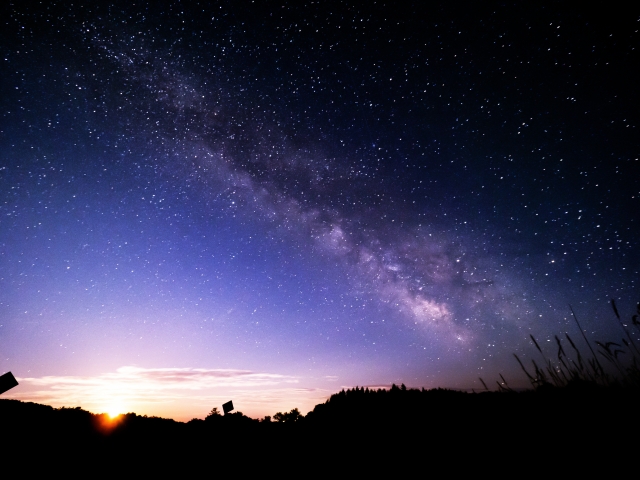
Awe is considered an emotion that arises when we encounter “vastness” or “greatness” that goes beyond our understanding (Keltner & Haidt, 2003).
In particular, we often experience a feeling that seems contradictory yet is deeply connected in moments such as being confronted with magnificent nature, historical architecture, a breathtaking performance, or an act of human kindness. This causes us to feel very small (small self; e.g., Piff et al., 2015) while at the same time, feel connected to something larger than ourselves (a self-transcendent emotion; e.g., Stellar et al., 2017).
Psychological research shows that people who experience awe temporarily become less self-centred and more likely to notice their connections with others, nature, and society (Preston & Shin, 2016; Stellar et al., 2018). In other words, the kind of experience in nature that leaves you speechless, or makes you think, “Wow,” is not merely soothing; it can also quietly unsettle and reshape how you sense the relationship between yourself and the world.
This is where it connects to world citizen education. Living as a world citizen is not only a matter of knowledge; it is also deeply tied to a person’s mindset and how vividly and realistically they can hold the feeling that they are part of the world.
A “Nonreligious Country” and Nature-Based Spirituality
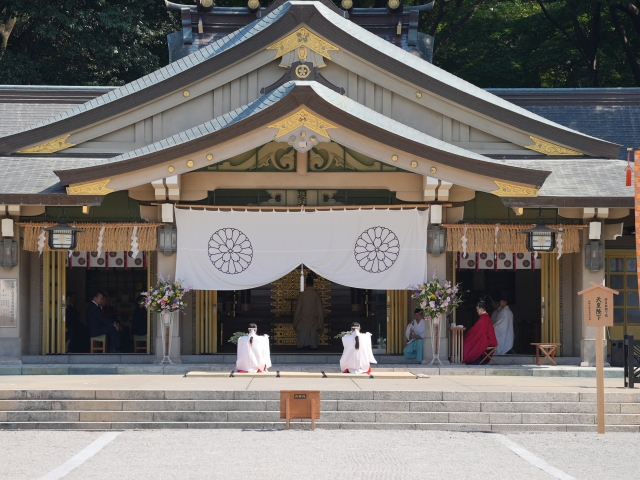
It is often said that many people in Japan consider themselves “nonreligious.” For example, in the 2013 National Character Survey conducted by the Institute of Statistical Mathematics, 28% of respondents reported having a religious faith (data here). Even in global surveys, the share of people in Japan who identify themselves as religious remains in the 10–20% range, as shown below.
- 16% (WIN-Gallup International, 2012)
- 28% (JGSS 2000–2003)
- 14.6% (World Value Survey by Haerpfer et al., 2022)
And yet, in practice, behaviours such as visiting shrines during New Year’s festivities, praying in temples, visiting family graves during religious holidays, or even an innate belief in something sacred in mountains and forests are common among Japanese people. In fact, an NHK survey on Japanese attitudes found that 72% of respondents visit graves several times a year (NHK, 2018). Global surveys have also found that 70% of people make offerings at graves or at a Buddhist family altar, and that 64% believe in gods or other invisible beings (Pew Research Center, 2024).
In particular, research on religion and spirituality within psychology, my (Takechika Hayashi) field of study, has focused on forms of spirituality connected to “relationships with nature and ancestors,” to the point that there are even academic journals devoted to the topic (e.g., Psychology of Religion and Spirituality, Journal for the Scientific Study of Religion).
For example, spirituality can involve feelings such as:
- Standing before a forest or the sea, you sense a “vast presence” that you cannot see (e.g., Snell & Simmonds, 2012; Hayashi & Nomura, 2025).
- Within natural scenery, you feel, “I’m not alone—I’m being supported by something” (e.g., Pritchard et al., 2020).
- When thinking of ancestors or those who have passed away, you feel that your life exists within a flow that links past and future (e.g., Sakurai, 2003).
This differs somewhat from religions such as Christianity where concrete ideas like “doctrine” and “the church” are central. In this alternative form of spirituality, the feeling of being connected to something beyond the self is central instead. And importantly, this feeling is not fixed to any single religion; rather, it can be shared by many people as “one mode of seeing the world” (de Jager Meezenbroek et al., 2012). In other words, even as the world becomes divided by religious differences, experiences of feeling “I am part of the world” through nature and spirituality can also serve as a common foundation that transcends nations and religions.
Feeling Like a “World Citizen” Starts with Sensation, Not Labels
So how does this discussion of nature and spirituality connect to the idea of a “world citizen”?
While we might understand a world citizen as a way of being, such as valuing the country and religion one belongs to, we might also understand world citizenship as being a part of a wider world, and, as a member of that world, trying to hold a sense of responsibility and empathy.
Feelings of awe and a spiritual sense of connection with nature can loosen the oppositional frame of “me vs. the world,” and help us sense a relationship more like “me ∈ the world.” When that happens, issues such as environmental problems, conflict, and poverty begin to appear not as “news from somewhere far away,” but as “events in the world that I belong to.” In fact, research suggests that awe can promote a world-citizen mindset (Seo et al., 2023).
Of course, that alone may not be enough to change behavior.
Still, if we see what world citizen education aims for not merely as “inputting knowledge,” but as a process of nurturing a more fundamental question.
“How am I connected to this world?”
Then emotions tied to experiences in nature and spirituality become an important doorway into that process.
From the Classroom to Nature: A Small Proposal for World Citizen Education
So how might we make use of these perspectives in university-level world citizen education? Here are a few modest suggestions.
Mini Fieldwork Using Nature on Campus
At universities in countries such as South Korea and North America, short fieldwork activities that use highly familiar natural environments, such as wooded areas on campus, grassy lawns, and nearby riverbanks, are already being implemented. The structure is simple: students spend part of their lunch break or class time walking through a green space, briefly record their feelings in a short journal or worksheet on the spot, and then return to the classroom to share in small groups. Even with this minimal design, reports have noted mood recovery, reduced stress, and increased attachment to nature and interest in environmental issues (e.g., Bang et al., 2017; Kim et al., 2020; Shrestha et al., 2021).
As this suggests, you do not need to travel to distant mountains or the sea. Short fieldwork can be conducted in a school courtyard, a nearby riverside area, or a park. Simply having students respond to prompts such as “What did you notice, and what did you feel?” and “In that moment, how did you sense the relationship between yourself and the world?” and then share in small groups can itself serve as practice in articulating “connection.”
Since the 1998 academic year, the Japan’s national curriculum guidelines includes one of the qualities and abilities expected in moral education includes the following: from the perspective of matters “primarily concerning relationships with nature and the sublime,” there is “the cultivation of one’s emotional sensitivity through opportunities to become familiar with nature, to be moved by beauty, and to feel awe toward what transcends human power.” In that sense, becoming close to nature and feeling awe may also be effective for students’ emotional and moral development.
Using Academic Knowledge, Including Psychology, as a Bridge
In recent years, there has also been a growing movement to incorporate findings from psychology and related fields as a “bridge” within this kind of experiential learning. For example, some classes introduce experimental research, such as through a short lecture or worksheet format, showing that awe elicited by grand natural scenes or images of space can enhance the sense that “I am part of the world,” as well as one’s self-image as a global citizen (details here). When students first express what they felt in nature in their own words, and then learn, “Actually, psychology has studied this kind of feeling too, and these mechanisms have been proposed,” experience and theory connect. As a result, students can come to see their experience not as “just imagination,” but as a meaningful emotion that relates to world citizen education.
Programs in world citizen education that use photographs of Earth from space or documentaries to evoke awe and a sense of global unity, and then follow up with dialogue, are based on the same idea.
If research on awe and spirituality is introduced not through dense technical terms, but as a kind of “map of how the mind moves,” students may find it easier to reflect on their own experiences more objectively. Knowing “This feeling I had is being studied in this way” can deepen learning as a world citizen from both sides: sensation and knowledge.
Holding a Vast World and a Small Self at the Same Time
When we stand before immense nature, we are made keenly aware of how small we are. And at the same time, a quiet feeling begins to rise within us: “Even so, I am living as part of this wide world.”
I believe world citizen education is not about demanding that people “become heroes who save the world.” Rather, it is an endeavor to explore ways for our small selves to keep staying connected to the world.
The social sciences and humanities, including psychology, provide tools for articulating what is happening within us in those moments and for examining it empirically. If we can carefully gather the subtle emotions that arise in nature and the hard-to-explain spiritual sensations, rather than leaving them as a vague “somehow,” then perhaps we can begin to build a foundation from which to speak about being a world citizen as something personally real.
References
Bang, K. S., Lee, I., Kim, S., Lim, C. S., Joh, H. K., Park, B. J., & Song, M. K. (2017). The Effects of a Campus Forest-Walking Program on Undergraduate and Graduate Students’ Physical and Psychological Health. International journal of environmental research and public health, 14(7), 728. https://doi-org.kyoto-u.idm.oclc.org/10.3390/ijerph14070728
de Jager Meezenbroek, E., Garssen, B., van den Berg, M., van Dierendonck, D., Visser, A., & Schaufeli, W. B. (2012). Measuring spirituality as a universal human experience: a review of spirituality questionnaires. Journal of religion and health, 51(2), 336–354. https://doi-org.kyoto-u.idm.oclc.org/10.1007/s10943-010-9376-1
Haerpfer, C., Inglehart, R., Moreno, A., Welzel, C., Kizilova, K., Diez-Medrano J., M. Lagos, P. Norris, E. Ponarin & B. Puranen (eds.). 2022. World Values Survey: Round Seven – Country-Pooled Datafile Version 6.0. Madrid, Spain & Vienna, Austria: JD Systems Institute & WVSA Secretariat. doi:10.14281/18241.24
Keltner, D., & Haidt, J. (2003). Approaching awe, a moral, spiritual, and aesthetic emotion. Cognition and Emotion, 17(2), 297–314. https://doi.org/10.1080/02699930302297
Kim, J. G., Jeon, J., & Shin, W. S. (2021). The Influence of Forest Activities in a University Campus Forest on Student’s Psychological Effects. International journal of environmental research and public health, 18(5), 2457. https://doi-org.kyoto-u.idm.oclc.org/10.3390/ijerph18052457
Piff, P. K., Dietze, P., Feinberg, M., Stancato, D. M., & Keltner, D. (2015). Awe, the small self, and prosocial behavior. Journal of personality and social psychology, 108(6), 883–899. https://doi-org.kyoto-u.idm.oclc.org/10.1037/pspi0000018
Pritchard, A., Richardson, M., Sheffield, D., & McEwan, K. (2020) The Relationship Between Nature Connectedness and Eudaimonic Well-Being: A Meta-analysis. Journal of Happiness Studies, 21, 1145–1167. https://doi.org/10.1007/s10902-019-00118-6
Preston, J. L., & Shin, F. (2016). Spiritual experiences evoke awe through the small self in both religious and nonreligious individuals. Journal of Experimental Social Psychology, 70, 212-221. https://doi.org/10.1016/j.jesp.2016.11.006
Sakurai, K. (2003). Japanese Religious Style and the Structure of Ancestor Worship. Christ and the world, 13, 44–81.
Seo, M., Yang, S., & Laurent, S. M. (2023). No one is an island: Awe encourages global citizenship identification. Emotion , 23(3), 601–612. https://doi-org.kyoto-u.idm.oclc.org/10.1037/emo0001160
Shrestha, T., Di Blasi, Z., & Cassarino, M. (2021). Natural or Urban Campus Walks and Vitality in University Students: Exploratory Qualitative Findings from a Pilot Randomised Controlled Study. International journal of environmental research and public health, 18(4), 2003. https://doi-org.kyoto-u.idm.oclc.org/10.3390/ijerph18042003
Snell, Tristan & Simmonds, Janette. (2012). “Being in That Environment Can Be Very Therapeutic”: Spiritual Experiences in Nature. Ecopsychology. 4. 326-335. 10.1089/eco.2012.0078.
Stellar, J. E., Gordon, A. M., Piff, P. K., Cordaro, D., Anderson, C. L., Bai, Y., Maruskin, L. A., & Keltner, D. (2017). Self-Transcendent Emotions and Their Social Functions: Compassion, Gratitude, and Awe Bind Us to Others Through Prosociality. Emotion Review, 9(3), 200-207. https://doi-org.kyoto-u.idm.oclc.org/10.1177/1754073916684557
Stellar, J. E., Gordon, A., Anderson, C. L., Piff, P. K., McNeil, G. D., & Keltner, D. (2018). Awe and humility. Journal of Personality and Social Psychology, 114(2), 258–269. https://doi.org/10.1037/pspi0000109